7 Years: The Wait That Ended in Refunds for Cybertruck Fans Down Under
Tesla has officially halted the Cybertruck rollout in Australia and New Zealand, issuing full refunds to reservation holders who have waited since late 2019.
By Juan Gonzalez ·
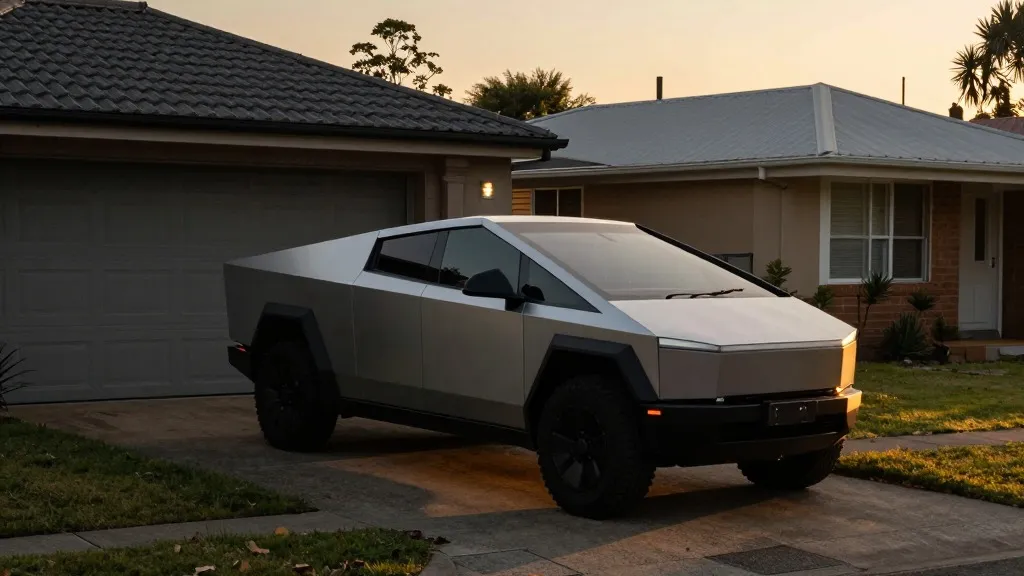
For thousands of drivers in Australia and New Zealand, the wait for an electric pickup truck has come to an abrupt end. Tesla has confirmed that it is no longer planning to build the Cybertruck for these markets, meaning reservation holders will receive their money back rather than a vehicle. The news arrived via email today, signaling the finality of a decision that has been in the works for some time.
The financial impact for consumers is straightforward. Those who paid the initial A$150 reservation fee in November 2019 will see that amount, along with any subsequent payments, returned to them. Tesla states that these refunds will be processed within 30 days. To sweeten the deal for those who still want a new electric vehicle, the company is offering a free one-year subscription to Full Self-Driving (Supervised) for anyone who orders a Model 3 or Model Y instead.
This move effectively ends a seven-year period of anticipation. When the reservation page first opened in 2019, the Cybertruck was a major talking point, with Australia emerging as a significant market for the vehicle. While Tesla has never officially broken down its reservation numbers by region, third-party tracking suggested that Australia and New Zealand accounted for a notable share of global interest, placing the region among the top markets alongside the US and Canada.
The path to this cancellation was neither smooth nor quick. In May 2022, Tesla quietly removed the ability to place new reservations in Australia, replacing the option with a button to sign up for updates. At that time, no refunds were issued, leaving existing reservation holders in a state of limbo. Despite the lack of new orders, the company continued to engage with the market, including a display tour of the vehicle in 2024.
During that period, CEO Elon Musk told shareholders that certification for other markets might happen "sometime next year." However, as 2024 turned into 2025 and then 2026, the right-hand-drive version never materialized. The core technical hurdle remains the vehicle's design; the Cybertruck is manufactured exclusively in left-hand drive. Adapting it for right-hand-drive markets like Australia, New Zealand, the UK, and Japan requires significant engineering changes and local certification, a costly endeavor for a product facing softer demand in its home market.
Recent sales figures highlight why Tesla may have pulled the plug. In the third quarter of 2026, Tesla delivered just 8,295 units categorized as "Other Models," a group that now consists almost entirely of Cybertrucks since production of the Model S and Model X ended. Analysts estimate that actual Cybertruck sales were between 7,000 and 8,000 units for that quarter. This pace translates to roughly 30,000 units per year, a significant drop from the production line's capacity of 250,000 units annually.
The economics of launching a new version for two markets with a combined population of about 33 million appear difficult to justify at current sales volumes. Tesla’s international strategy for the truck so far has focused on left-hand-drive regions. Deliveries began in South Korea in late 2025 and the UAE in January 2026, with configurators rolling out in Saudi Arabia, Qatar, Jordan, and Israel. The European market remains largely inaccessible due to pedestrian safety regulations.
While the cancellation is a disappointment for those who held onto their reservations, many may have already adjusted their expectations. The Cybertruck available today is more expensive and offers less range than the version initially promised in 2019. Furthermore, US sales have declined significantly from their peak in 2024. For Australian and New Zealand buyers, the prospect of importing a premium-priced, left-hand-drive truck that requires further modification has likely diminished its appeal.
This decision underscores a shift in the vehicle's positioning. The Cybertruck is increasingly becoming a niche product, primarily targeted at the North American market. Tesla’s international efforts now appear focused on finding buyers for existing left-hand-drive inventory rather than investing in the substantial re-engineering required to bring the truck to the right-hand-drive world. For the thousands of Australians and New Zealanders who held out for seven years, the wait is finally over, with their deposits returning to their bank accounts.
Source: Electrek