Musk Claims Suppliers Speed Chip Tool Shipments
The SpaceX chief said during a recent earnings broadcast that equipment makers are accelerating delivery of critical manufacturing tools for a joint Tesla-SpaceX semiconductor venture.
By Thomas Reynolds ·
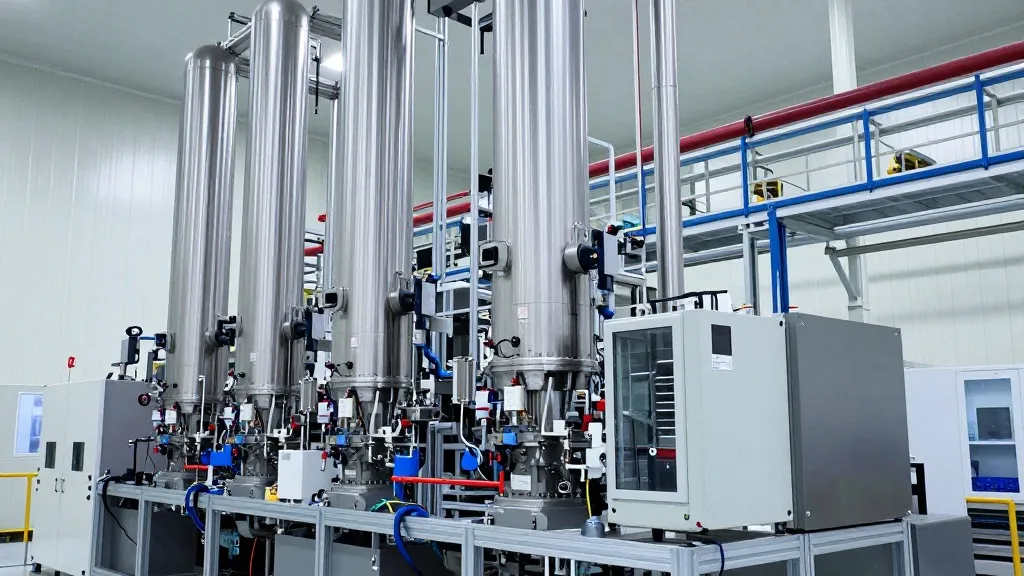
Elon Musk says the machinery needed to build a massive new semiconductor plant will arrive sooner than planned, a move intended to help meet a target for volume chip production by the third or fourth quarter of 2028. He made the comments during a broadcast of SpaceX's Q3 2026 earnings call on October 20, 2026.
The project, a joint effort between Tesla and SpaceX, aims to build a facility in Gibbons Creek, Texas, capable of fabricating logic, memory, and advanced packaging components in a single location. Musk characterized the schedule as highly aspirational, noting that the timeline carries 'big error bars.' He acknowledged the aggressive dates while expressing gratitude to suppliers for their assistance in accelerating equipment deliveries.
The venture relies on advanced manufacturing tools from major industry suppliers. Intel joined the project in April 2026 to help co-develop and refactor silicon fabrication technology, providing access to its 14A manufacturing process. ASML, the sole commercial supplier of extreme ultraviolet lithography systems, is considered a critical partner for high-volume production. Other suppliers providing processing and control machinery include Applied Materials, Lam Research, KLA Corporation, and Tokyo Electron.
Questions remain regarding the specific details of the expedited delivery schedule. Unofficial sources previously indicated that the first EUV tool was slated for arrival in mid-2027, but it was not confirmed whether this timeline has changed. Furthermore, experts have questioned the feasibility of the facility's ambition to manufacture 1 terawatt of AI computing power per year. Research firm Gartner estimates the total global AI-optimized data center capacity is roughly 44 GW as of late 2026, which represents a fraction of the project's planned output.
Musk also outlined near-term goals for his AI companies during the broadcast, stating an expectation to have 2.5 to 3 gigawatts of computing capacity active by the end of 2026. He added that he would be surprised if the companies do not reach a total of 13 GW of AI compute by the end of 2027. To support this growth, SpaceX and xAI are procuring next-generation Nvidia hardware, including a 440,000-GPU Nvidia 'Vera Rubin' training cluster planned for online status by the end of Q2 2027.
Once fully scaled, the facility's output is intended to supply chips for xAI clusters, self-driving vehicles, Optimus humanoid robots, SpaceX's orbital AI data center, and the broader AI industry. Musk stated that the commercial value of the facility's output would place it within the top 20 global country GDPs from a single physical building.
Source: Tom's Hardware